The Jazz Network Foundation
History & Legacy
From the SereNgeti Ballroom to the Carr Center, a history of building cultural homes for Detroit jazz.
Spaces where culture could gather
The Foundation’s history is a story of persistence, vision, and cultural stewardship—creating opportunities where few existed and building institutions where none had taken root.
The SereNgeti Ballroom and SereNgeti Galleries were more than event venues. They were cultural homes, where music, visual art, dance, and dialogue could coexist. Thursday Night Jam Sessions and youth development programs hosted by Harold McKinney gave musicians room to sharpen their craft and younger artists access to experienced practitioners.
The National Jazz Orchestra
The Galleries became home to the National Jazz Orchestra, directed by Bill Foster, which performed at the Detroit Jazz Festival for four consecutive years. The space also housed the Youth in Music Program, African dance troupes, and exhibitions of African and Haitian artwork.
“You can come to an art exhibit that turns into a jazz concert, or a jazz concert that turns into an art exhibit.”
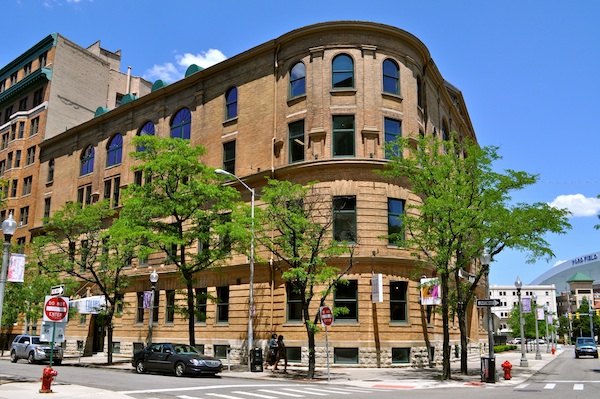
The Virgil Carr Center, one of the Foundation’s important former homes
A downtown cultural home
For several years, the Virgil Carr Center provided another important setting for the Foundation’s work. Though the Foundation is no longer based there, the building remains part of its institutional memory and of a period when downtown Detroit’s creative resurgence was being shaped through Black cultural spaces.
Twenty-two years in motion
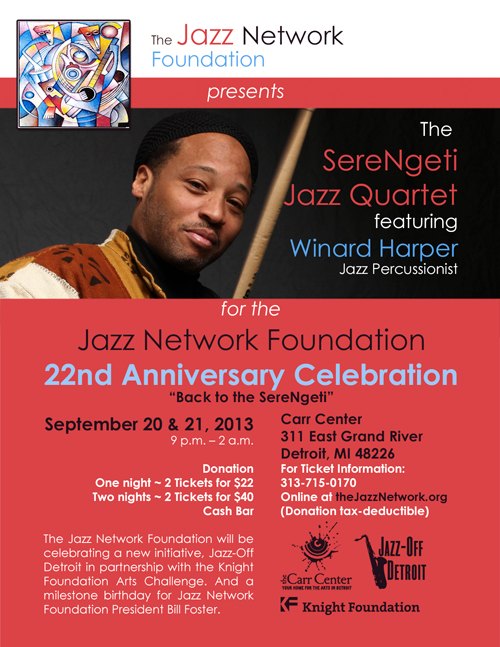
In 2014, the Jazz Network Foundation marked its 22nd anniversary with a two-hour Detroit concert that honored the tradition by carrying it forward.
Legacy Case Study · Detroit · 2014
Jazz Network Foundation 22nd Anniversary
Organized by Bill Foster, the anniversary concert was both a celebration of institutional longevity and a vivid demonstration of the Foundation’s continuing artistic purpose. Supported by the Knight Foundation, the program brought the Detroit jazz community together around performance, memory, and renewal.
The SereNgeti Quartet, joined by the extraordinary percussionist Winard Harper, approached the music as a living language. Ralph Armstrong on bass, Marcus Elliot on saxophone, Mike Jellick on piano, and Harper created a contemporary interpretation of Duke Ellington’s In a Sentimental Mood that honored the composition while revealing new colors within it.
The archival video is an excerpt from the complete 120-minute concert, preserving a milestone that reflected the reach of Foster’s work and the community that had grown around the Jazz Network Foundation. The presentation image here draws from the evening itself, showing Bill Foster with musicians and guests including Winard Harper and Joan Belgrave.